What it is
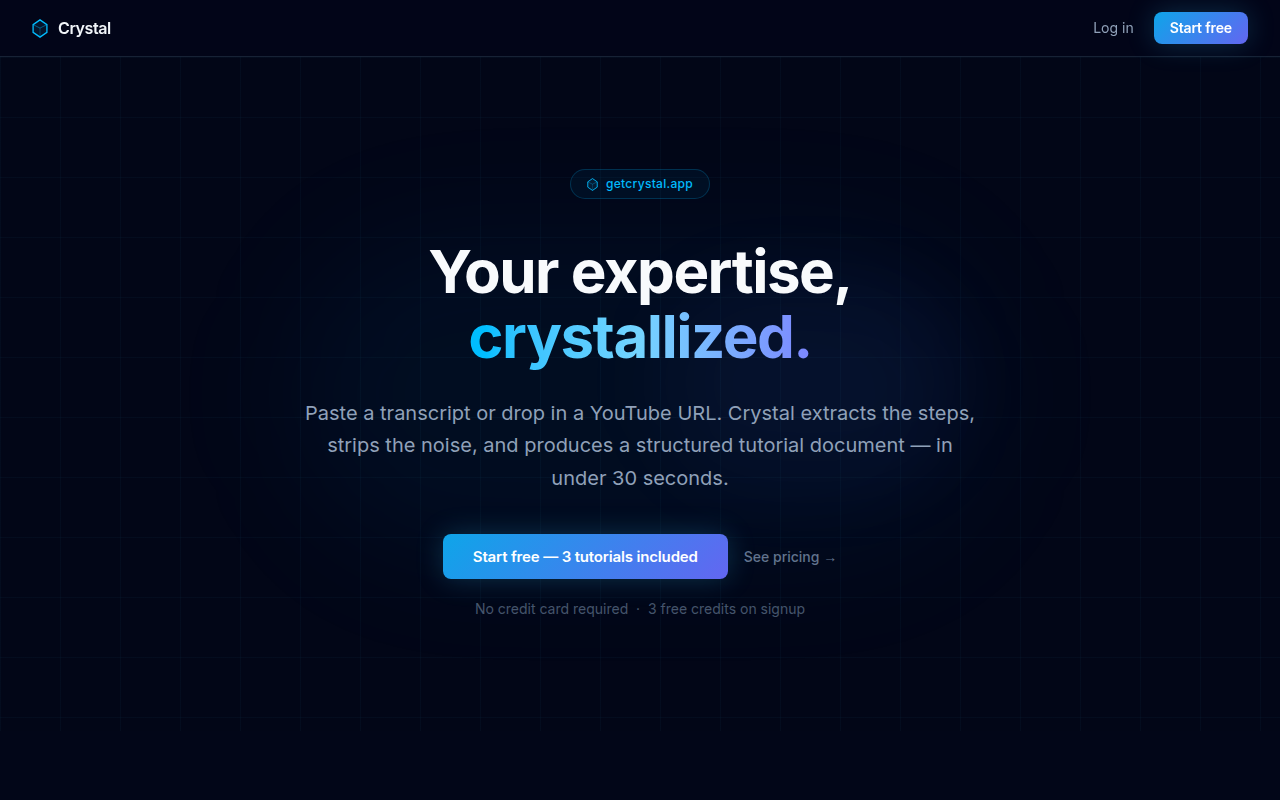
Crystal turns messy spoken material into a tidy written guide. You give it a meeting transcript or a YouTube link. It hands back a Markdown tutorial with headings, numbered steps, code blocks where they belong, and a short summary. The point is to save the hour it takes to turn "I showed someone how to do this on a call" into a document they can follow later.
Try it
This one is the real, live site, not a copy. Sign up with an email address and confirm it; new accounts start with a few free generations. Paste a short transcript (a few paragraphs is plenty) or a YouTube link to a how-to video, then press generate. Within a minute you should see a rendered tutorial. Rename it, download it as Markdown, or make a public share link. Each generation uses a real LLM call and one credit, so a single test run is enough to get the feel. Works on desktop or phone.
How it works
- Create an account and verify your email.
- Paste text, or a YouTube URL (the app fetches the video's transcript).
- The text goes to a language model with instructions to write a structured tutorial.
- The result opens in a viewer where you can edit the title.
- Download it as a
.mdfile or share it with a public link. - Your dashboard lists every tutorial you have made.
What exists today
- Email and password sign-in with email verification
- Generation from pasted text or a YouTube link
- Rendered tutorial viewer with title editing and Markdown download
- Public share pages
- Credit tracking per account and a working checkout for more credits
- Dashboard, landing page and billing page
What isn't there yet
- No automated tests
- No way to edit the body of a tutorial inside the app, only the title
- No guest or demo mode; you must sign up to see anything beyond the landing page
- The prompt-tuning work is started but no tuned prompt is in use yet
- Project docs inside the repo still describe the older TutorialFlow version
Under the hood
- Next.js and React with TypeScript and Tailwind, deployed in a Docker container
- Supabase handles accounts and the database, with row-level security so users only see their own tutorials
- Generation goes through OpenRouter, so the underlying model can be swapped
- Credits are counted in the database; payments run through Stripe