What it is
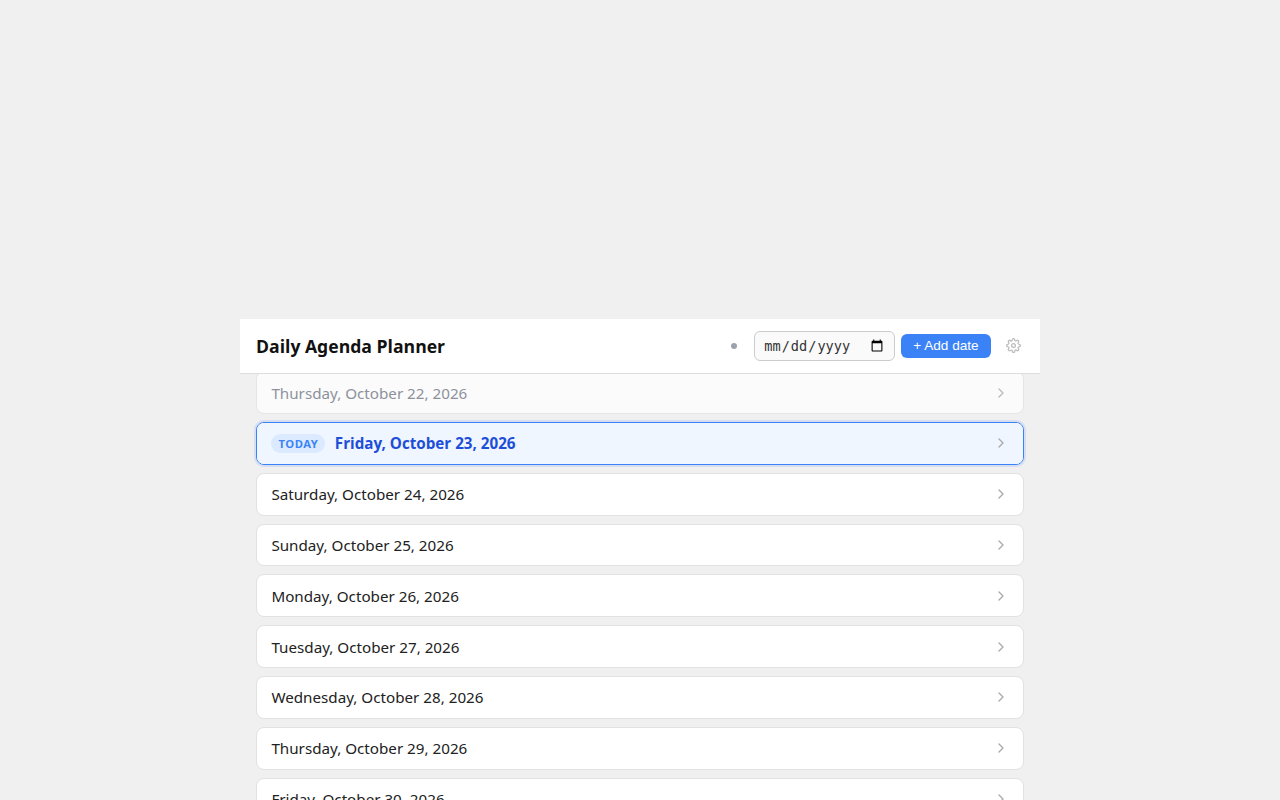
The Daily Agenda Planner is a lightweight to-do list laid out as days. You see today and the days ahead as a list; open a day to add items, give them times and color tags, drag them into order, and tick them off. Anything unfinished rolls forward to today. It was built as a prototype for a friend's idea, and it is meant to feel like paper, not like project-management software.
Try it
Tap today to open it and add three items. Give one a time, give another a color tag, and drag them into a new order. Tick one off. Open a future day and add something there. If your browser asks about notifications, allow them to see timed reminders. Your items are stored only in your browser; sync stays off unless you turn it on and pick a passphrase. Works on phone or desktop.
How it works
- Open the page; today and the coming days appear as a list, with the past week visible above.
- Tap a day to expand it and add items.
- Set times, pick color tags (you can rename them), and drag to reorder.
- Unfinished items carry forward to today automatically.
- Timed items trigger a browser reminder; if one is missed, a banner tells you.
- Optionally turn on sync with a passphrase so a second device sees the same plan.
What exists today
- A 90-day rolling list that remembers which days you had open
- Times, renamable color tags, drag reordering, rollover and dark mode
- Browser notification reminders and a missed-reminder banner
- Export and import as a file
- Live updates across open tabs
- End-to-end encrypted sync: the server only ever stores scrambled data it can't read
What isn't there yet
- A full two-device sync round trip has not been confirmed since the last fix
- No recurring items or templates yet
- No sharing a plan with another person
- Reminders only fire while the browser is able to show notifications
Under the hood
- A single HTML file with inline styles and scripts, saving to the browser's local storage
- Sync encrypts in the browser (AES-256 with a key made from your passphrase) before anything is sent
- A tiny PHP script stores the encrypted blobs, with rate limits and a cap on total slots
- Built by AI agents from a phased requirements document and roadmap